
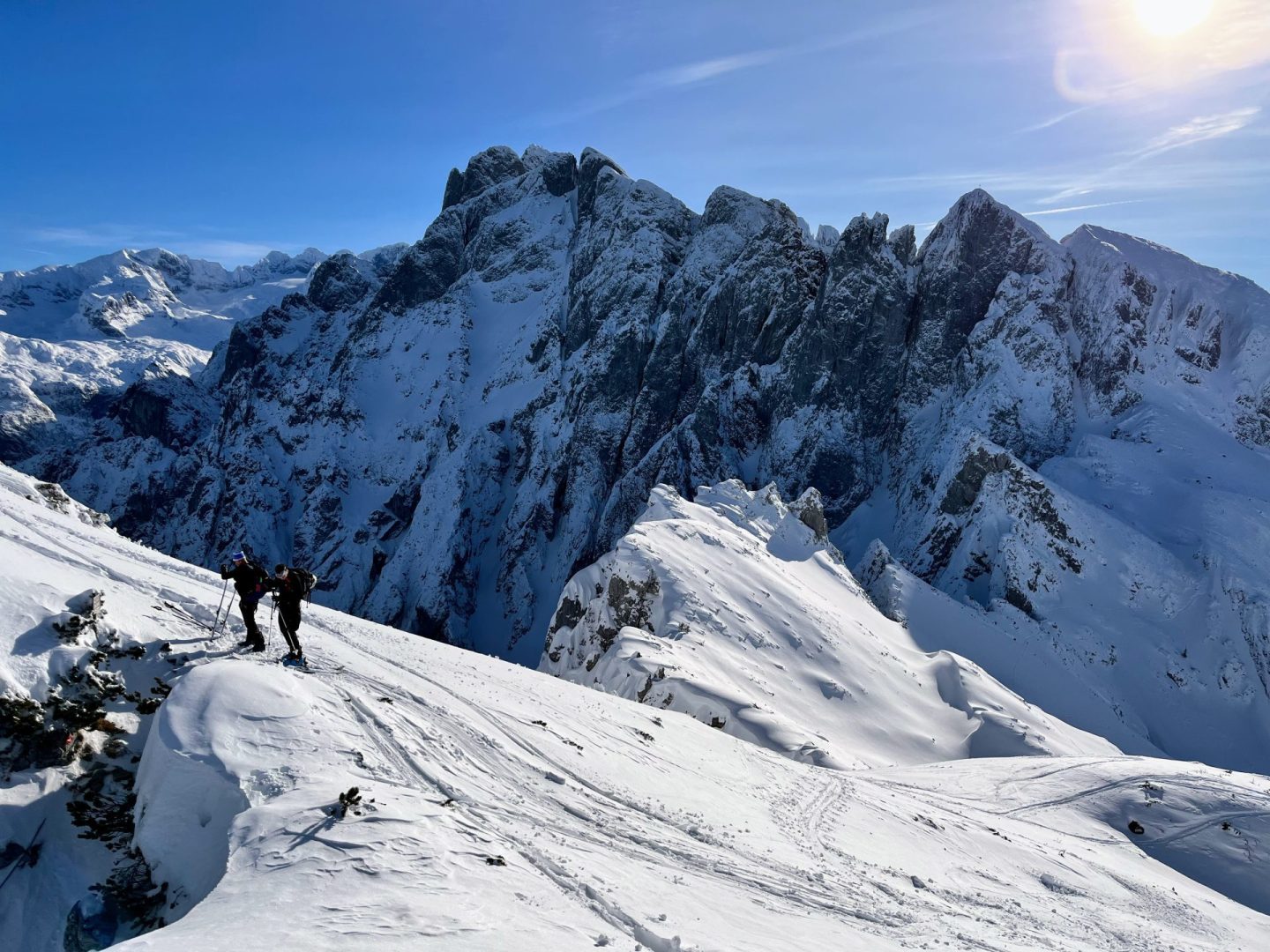
Whether you’re out exploring in the winter or in snowy mountains, putting your knowledge into practice is just as important as the quality of your gear. Avalanche danger doesn’t discriminate—whether you’re a skier, splitboarder, snowshoer, or climber—quick and confident decisions can save lives.
Here are 5 reasons why you should review, practice, and refresh your avalanche safety knowledge every year.
1. The safety routine wears out quickly
In the event of an avalanche, every second counts. You can only master the use of the transceiver, probe, and shovel, as well as the search procedure, if you practice regularly. Chances are you’ll only attend an avalanche training course once a season, so the knowledge is quickly forgotten since it’s not part of our daily routine. That’s why it’s important to review the technique annually:
- you'll be faster and more efficient at searching,
- better decision-making and organizational skills in stressful situations,
- you minimize the possibility of human error.
Effective avalanche rescue is a skill that can only be mastered through practice.

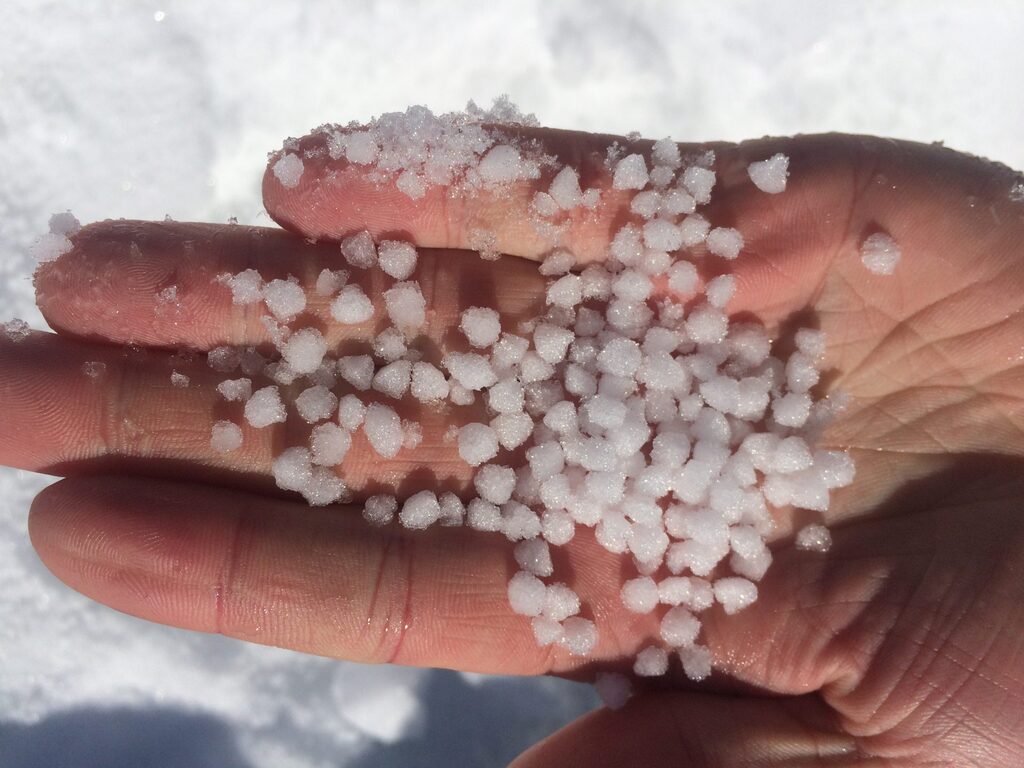
2. Every season is unique—different snow conditions, new hazards
The mountain is never the same twice. Conditions can change from hour to hour, or even from minute to minute.
Avalanche danger is determined not only by fresh snowfall or steep terrain, but also by:
- temperature fluctuations,
- wind direction and speed,
- interlayer bonding,
- a drop in temperature at night, or the absence of one.
These change every winter and create new conditions. Annual review helps you stay up to date on which situations pose a real risk or accurately interpret an avalanche report.
3. Equipment is constantly evolving, and you need to keep up
Avalanche transceivers, airbags, probes, and shovels undergo minor or major upgrades every year. You don’t necessarily need to buy new gear, but you should understand how the new features work so that if, for example, a fellow hiker uses a different type of shovel or probe, you’ll know how to use it as well.
That’s exactly what the annual training sessions and refresher courses are for:
- learn about the functions of various transmitters or devices,
- update your settings,
- try out and test the equipment in real-world conditions.
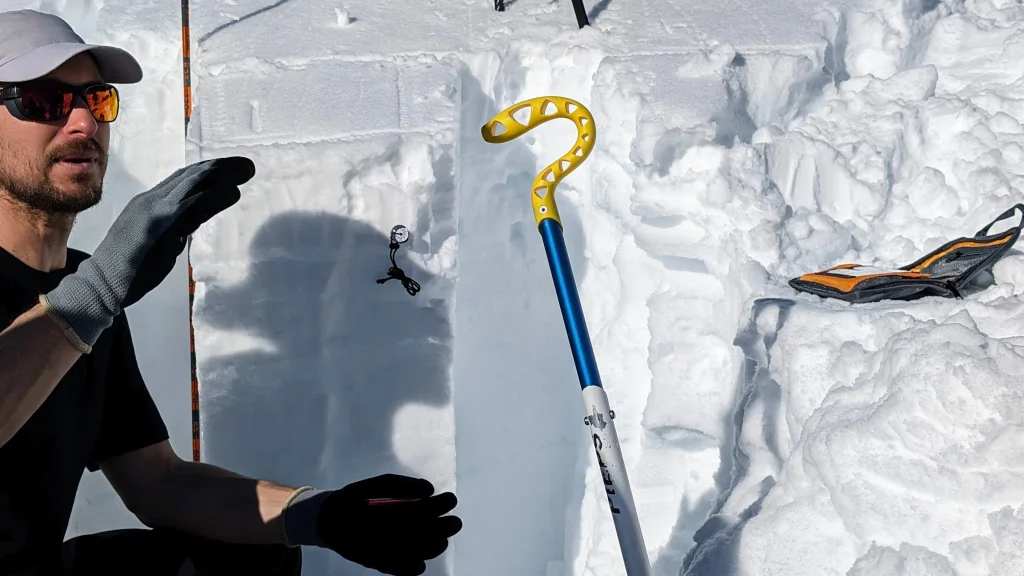
4. Working as a team makes rescue operations much more effective, but this is something that has to be learned
Avalanche rescue by a single person is ineffective.
Quick and organized teamwork saves lives, but only if the team members:
- know who is responsible for what,
- communicate,
- they don't get tangled up,
- They don't panic.
You can’t learn this just by studying the theory.
Regular practice helps ensure that your team speaks the same “rescue language.” There’s a good chance you’ll develop a rescue routine if the same people practice together on a regular basis.

5. You need to know yourself – decision-making, human factors
Most avalanche accidents are not caused by the snow, but by poor decision-making.
One of the most important aspects of avalanche training is recognizing:
- when you take more risks than you should,
- how team dynamics influence,
- how much you listen to your inner instincts
These human factors must be recalibrated annually.
Self-criticism, self-reflection, and conscious decision-making are just as important as technical knowledge.

Summary
Keeping your avalanche knowledge up to date isn’t a luxury or an extra—it’s the foundation of safety in the snowy mountains. An annual hands-on training session or refresher course can save lives, whether it’s yours, your hiking companions’, or even members of another group on the mountain.
Don't let the snow or unexpected weather catch you off guard: stay prepared, stay safe!
You can find more useful information in my blog posts about gear here: Posts
Whether you're a beginner or an experienced hiker looking to take an avalanche course, you can find the current courses here: Current courses
